2026 Latest Trend: Mobile Apps Powered by AI
Mobile apps are no longer just tools we occasionally use—they are an essential part of our daily lives. From ordering food and booking transport to managing businesses and finances, mobile apps have become deeply integrated into how we live and work. Many users interact with mobile apps every hour, often without realizing how dependent we have become on them.
As we move into 2026, mobile apps are evolving beyond simple software applications. They are now a core digital strategy for both individuals and businesses. With billions of users worldwide and continuous growth across all industries, mobile apps are no longer optional—they are a necessity. The global mobile app industry is projected to reach USD 700 billion (estimated) in revenue by 2027, highlighting the enormous economic impact and unstoppable momentum of this sector.
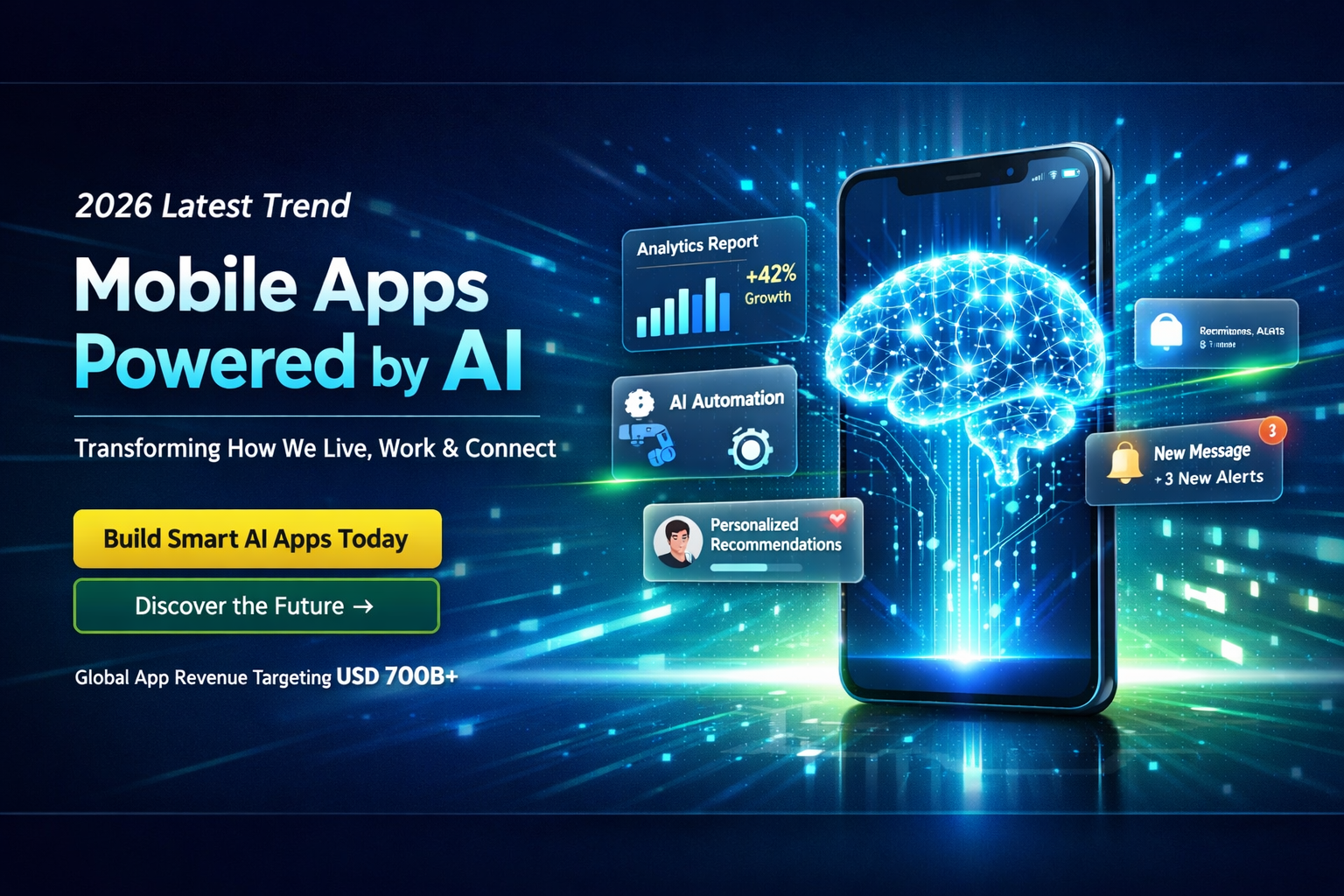
What truly defines the next generation of mobile apps is the rapid advancement of Artificial Intelligence (AI). Improvements in AI hardware, software, and user experience are transforming what mobile apps can achieve. Modern apps are becoming smarter, faster, and more adaptive—capable of learning user behavior, predicting needs, and delivering personalized experiences in real time.
Businesses that partner with mobile app development companies are now focusing on AI-driven solutions that go beyond basic functionality. AI-powered mobile apps can automate processes, analyze data instantly, enhance customer engagement, and support better decision-making. These intelligent apps respond to user demands more accurately and efficiently, creating experiences that feel intuitive and seamless.
In 2026 and beyond, the future of mobile apps lies in AI integration. Companies that embrace mobile apps powered by AI will gain a competitive advantage by delivering smarter user experiences, improving operational efficiency, and unlocking new growth opportunities. Mobile apps are no longer just platforms—they are intelligent digital ecosystems shaping the future of business and everyday life.
Lets dig inside what are the driving forces that top Mobile App Development Trends in 2026? Below are the factors actually alter the landscape of Mobile App Development trends in 2026.

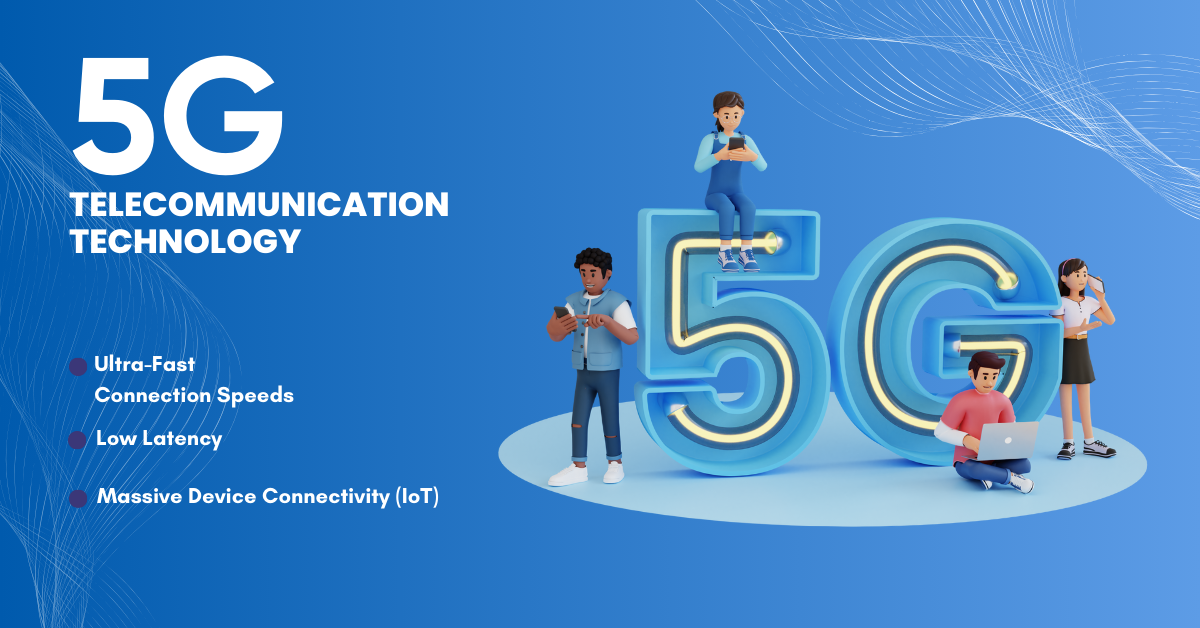
The evolution of cutting-edge software and hardware powering 5G networks marks a dramatic leap forward compared to the rollout of 3G and 4G. With unprecedented speed and reliability, 5G is transforming application performance by enabling faster data connection, ultra-low latency, and seamless ultra video streaming.
This breakthrough empowers developers to create next-generation applications that were previously impossible. Real-time AI-driven predictive analytics, immersive AR/VR experiences, and vast IoT ecosystems can now operate effortlessly, supported by the robust infrastructure of 5G. In essence, 5G is not just an upgrade—it is the foundation for a new era of Mobile App digital innovation.

Before the rise of artificial intelligence, big data was the key term used to analyze user behavior based on collected information. Businesses relied heavily on data analytics to understand patterns, preferences, and trends. However, with the advancement of AI, this responsibility has shifted to intelligent systems that now serve as the backbone of modern app frameworks.
AI enables applications to understand user behavior faster, more accurately, and more precisely, leading to significantly improved user experiences. Instead of relying solely on historical data analysis, AI continuously learns and adapts in real time. This allows apps to respond intelligently to user needs as they happen.
From virtual assistants and predictive text to personalized user interactions, artificial intelligence has proven to be far more efficient and effective in engaging and communicating with users. AI-powered features can anticipate user intent, automate responses, and deliver tailored content with minimal friction.
By 2026, we can expect further advancements in machine learning capabilities across all aspects of app development. Mobile apps will be able to provide smarter recommendations, faster responses, and seamless interactions—often without any human intervention. This evolution will transform mobile applications into intelligent, self-learning platforms that continuously enhance user satisfaction and business performance.

With the advancement of AI, basic coding tasks can now be generated without the direct involvement of programmers. As a result, app development companies are under increasing pressure to deliver applications faster, at lower cost, and with shorter development cycles. This shift has directly contributed to the rapid growth of low-code and no-code development platforms.
These platforms empower both business users and developers to build basic functional applications without requiring deep programming knowledge. By using pre-built interfaces, components, and automated workflows, low-code and no-code tools significantly reduce development complexity and technical barriers.
While complex and highly customized software solutions still required experience developers, low-code platforms have already made a substantial impact on the industry landscape. It's dramatically shorten delivery timelines, reduce development costs, and enable faster go-to-market products. This makes the tools especially suitable for user groups that require simple, fast, and less complicated applications.
As a result, the minimalist coding approach is accelerating business competition across industries. Companies that can launch applications quickly gain a competitive edge, forcing others to adapt or risk falling behind in an increasingly fast-paced digital market.


The core function of predictive analytics is to enable mobile apps to anticipate user needs in advance by analyzing behavioral data. Whether it is recommending a song, product, event, fitness goal, or travel destination, predictive algorithms can deliver highly personalized suggestions that are far more accurate than traditional data-driven tools such as basic big data analytics.
By leveraging AI and machine learning, modern apps can identify patterns, predict users intent, and respond proactively—often before users explicitly express their needs. This level of personalization enhances user satisfaction and creates more intuitive and engaging app experiences.
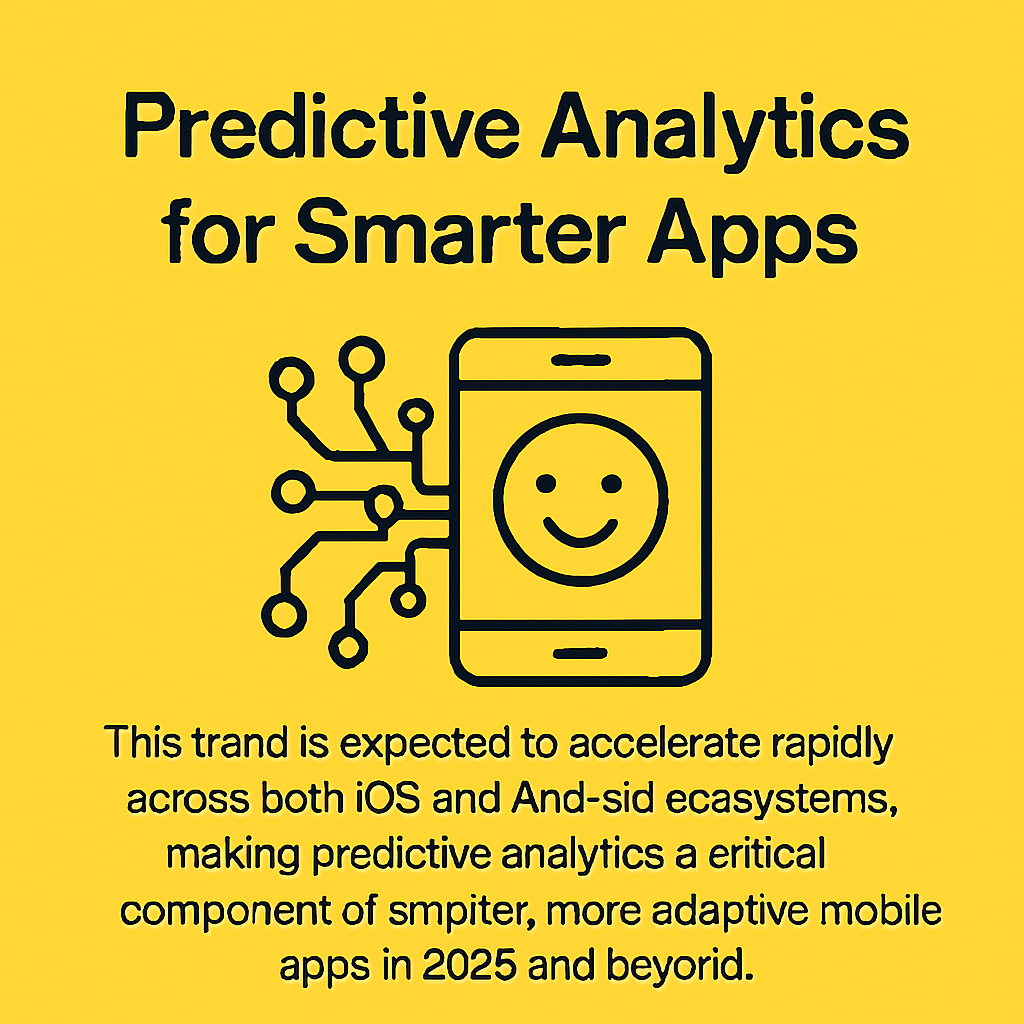
To remain competitive, solution providers must increasingly integrate predictive analytics into their applications. AI-powered predictive features help businesses improve customer retention, strengthen user engagement, and deliver more meaningful interactions that drive long-term loyalty.
This trend is expected to accelerate rapidly across both iOS and Android ecosystems, making predictive analytics a critical component of smarter, more adaptive mobile apps in 2026 and beyond.

From smartwatches and smart glasses to health trackers and other wearable devices, these technologies are increasingly shaping the future roadmap of mobile app development. Wearable products are no longer standalone gadgets or just a by-products, smart Wearable products are becoming essential extensions of mobile applications powered by AI.
Modern business apps are now expected to synchronize seamlessly across multiple devices, delivering unified health data, real-time notifications, remote controls, and critical alerts. AI plays a key role in analyzing wearable data, generating insights, and triggering intelligent responses that enhance both user experience and safety.
As wearable adoption continues to grow, app developers must design wearable-friendly applications that are responsive, efficient, and context-aware. Supporting wearables is no longer an optional feature—it has become a critical and prioritized requirement for mobile app development companies serving future-ready clients.
In 2026 and beyond, successful mobile apps will be those that intelligently integrate AI with wearable ecosystems, enabling smarter interactions, proactive alerts, and truly connected digital experiences.


Following the COVID-19 pandemic, contactless transactions rapidly became the norm for safety and convenience. This shift significantly accelerated the global adoption of cashless payments, particularly through mobile wallets and digital payment platforms.
Today, features such as in-app payments, one-tap checkout, facial recognition authentication, and cryptocurrency support are no longer optional add-ons. They are fast becoming standard and essential requirements for business applications heading into 2026.
AI plays a critical role in enhancing digital payment experiences by improving fraud detection, transaction security, personalization, and real-time decision-making. As a result, mobile app development trends in 2026 increasingly rely on seamless third-party API integrations, including payment gateways, e-wallet providers, biometric authentication services, and blockchain platforms.
This evolution enables businesses to deliver secure, fast, and user-friendly payment experiences while meeting growing consumer expectations. The integration of AI with mobile wallets and digital payments is an unavoidable progression in app development—one that cannot be underestimated in the competitive digital economy.
The future of mobile applications lies in adaptability, intelligence, and speed. Successfully implementing these mobile application development trends requires a technology partner who understands both business objectives and advanced technologies.
As a leading mobile app development company, we specialize in end-to-end hybrid, Android, and iOS app development, delivering scalable, secure, and high-performance solutions. Our approach enables businesses to adopt the latest AI-powered features with lower investment costs—without compromising functionality, security, or performance.
Whether you are building a simple consumer app or a complex enterprise platform, we ensure your product is AI-ready and future-proof for 2026 and beyond.
Conclusion
By 2026, mobile experiences will be increasingly shaped through the integration of AI, IoT, foldable devices, and immersive user interfaces. These trends reflect a strong shift toward greater personalization, speed, and intelligence embedded within modern business applications.
Whether you are a startup or an enterprise, adopting agile and flexible strategies is essential when planning Android and iOS app development. Businesses must be prepared to evolve quickly, embrace innovation, and align technology decisions with long-term digital goals.
With the right skills and extensive experience in mobile app development, we are confident in delivering innovative, feature-rich, and high-performing applications. Our solutions are designed to provide seamless user experiences, robust functionality, and future-ready performance, ensuring our clients stay competitive in the rapidly evolving mobile landscape.